
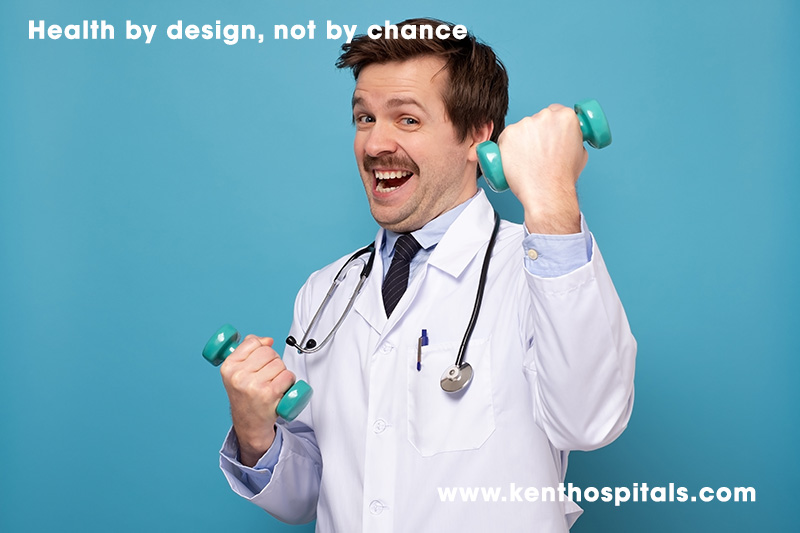
As the year 2025 draws to a close and we fast approach the new year, 2026, I made this New Year resolution a couple of months ago—so that it does not become yet another futile resolution, as so many of ours tend to be. Physically, I want to be super fit. I am deeply resolute this time, because in another two years I will turn 60 and officially become a senior citizen.
My favourite author, Tim Robbins, has famously said that two things motivate people immensely: pain and pleasure. Of the two, pain always has greater motivational power than pleasure.
Two dreadful incidents in my life were deeply painful. The first was an episode of acute cholecystitis that required an emergency laparoscopic cholecystectomy. The second was an acute myocardial infarction that necessitated coronary stenting. Although I was bedridden for only two to three days on both occasions and returned quickly to my routine, the impact of those experiences stayed with me. They hurt—not just physically, but emotionally.
That was my wake-up call. It compelled me to motivate myself to stay physically fit and to take better care of my health. However, as another favourite author of mine, Jim Rohn, aptly said, motivation alone is not enough to achieve anything—we need discipline.
Ever since then, I have fairly consistently maintained a good physical fitness routine. I have also taken to trekking and hiking, having completed the treacherous Hampta Pass trek, the challenging Everest Base Camp trek, and several other mini-treks over the last two years.
Indian doctors are notoriously known to have shorter life spans, with many succumbing to ischaemic heart disease at a relatively young age. This is largely attributable to our heavy workloads and our habitual neglect of our own health. For instance, I routinely work almost 16–18 hours a day and rarely get more than five to six hours of sleep. With such crazy schedule, how to find time for exercises? Here is what I have done.
Non-negotiable time: However busy we may be, it is essential to create a non-negotiable time for physical activity—ideally a fixed time slot each day. Nothing should intrude upon this period unless there is a dire emergency. If the scheduled slot is disrupted due to an unavoidable situation, an alternate time must be consciously created later in the day. I try to adhere to this discipline consistently, except during foreign travel.
Focus on what matters: I am diabetic, so I primarily focus on exercises that help control my blood sugar levels and reduce my dependence on medications. I do pranayama to avoid and control my allergic bronchial asthma and enhance my chest capacity. In addition, I enjoy trekking and hiking, activities that demand sustained endurance. Therefore, I also emphasize training that improves stamina and enables me to trek at high altitudes for longer durations.
Standing position in the outpatient department: I previously examined patients while seated in the outpatient department. COVID-19 proved to be a blessing in disguise, as it necessitated examining patients in a standing position to reduce exposure to aerosols from the nose and mouth. I have continued this practice even after the pandemic, as it naturally increases my physical activity during working hours. To prevent problems such as venous stasis and varicose veins, I consciously keep moving within the outpatient chamber rather than standing still for prolonged periods.
Mobile university: I love reading and have always read a lot of books. Recently, I have switched to audiobooks. Besides reducing physical clutter at home and in my office, they allow me to read while I walk. With Bluetooth earphones on, I listen to books during my walks; when I feel mentally fatigued, I switch to motivational talks or music. This way, learning, movement, and motivation happen simultaneously.
Following this, I engage in either treadmill training or cross-country walking in wooded areas. I then focus on muscle-strengthening exercises, targeting one muscle group each day. To maintain balance and prevent monotony, I rotate these sessions with yoga, Surya Namaskar, or Pilates, cycling or elliptical.
Writing while walking: Writing—whether blogs or books—is a constant in my life. With mobile voice-recording and voice-to-text AI tools, I now write even while walking. I use Apple Voice Memos to capture ideas instantly and apps like Otter, AI Transcribe, or Transcribe AI to convert speech into editable text. With Bluetooth earphones on, my walks double as creative sessions—movement sharpening both clarity and productivity.
Diversify: I consciously diversify the kinds of exercise I do. I begin my day with pranayama. I have designed a program called Octivation, which integrates pranayama, meditation, and manifestation rituals. Octivation helps me with goal setting, disciplined execution, and setting the tone for the day. It aligns my actions with my life’s objectives while simultaneously augmenting my physical and mental health.
Finding opportunities for physical activity in everyday life: I consciously look for opportunities to move my body in almost every activity. Except for otological surgeries, most other procedures are performed in a standing position, which itself adds to daily movement. I prefer taking the stairs and avoid lifts whenever possible. At conferences—often known for lavish banquets and musical evenings—I am usually the first to hit the dance floor and the last to leave. Dancing till the end of the program is not just enjoyable; it is also a wonderful way to burn off the calories accumulated during those sumptuous meals.
Sleep and rest: While I do not yet get the amount of sleep that medicine prescribes, the sleep I do get is deep and restorative—almost nothing can disturb it. Perhaps this reflects the quiet compensation of a body that has begun to move, train, and heal with intent. Sleep, like fitness, is a work in progress, and I hope to explore this important dimension of health in a future reflection.
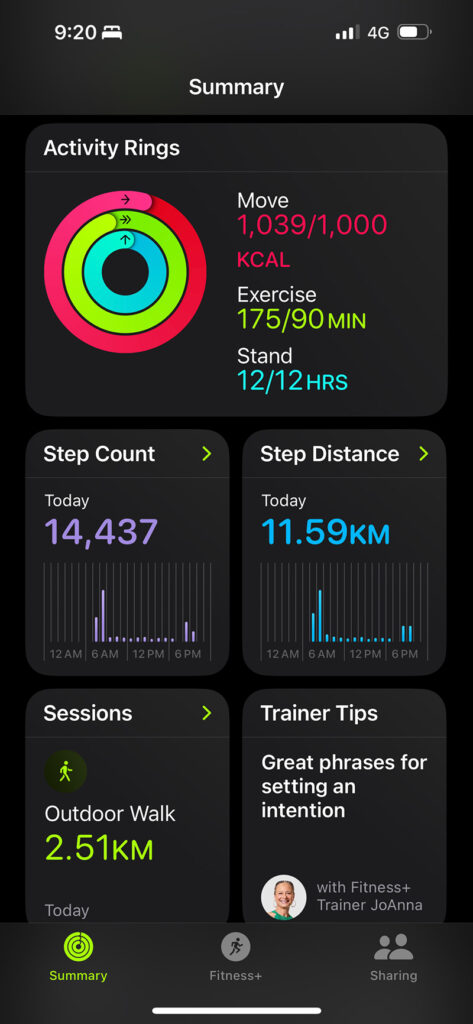
Monitoring and recording progress: What gets measured gets improved. Monitoring and recording progress adds structure, accountability, and motivation to any fitness journey. I use my Apple Watch, iPhone, and Evernote to track activity levels, workouts, steps, heart rate, and reflections. These tools transform effort into data, data into insight, and insight into sustained discipline. Over time, they not only document progress but also reinforce consistency—quietly reminding me that small, repeated actions compound into meaningful change.
We spend our lives caring for others, often at the cost of caring for ourselves. Fitness does not demand extra time—only better intent. Build movement into your day, protect a non-negotiable slot, and choose discipline over delay. Our patients need us skilled, present, and alive. Let us start treating our own health with the same seriousness we give to theirs—today, not someday.
Dr. Prahlada N.B
MBBS (JJMMC), MS (PGIMER, Chandigarh).
MBA in Healthcare & Hospital Management (BITS, Pilani),
Postgraduate Certificate in Technology Leadership and Innovation (MIT, USA)
Executive Programme in Strategic Management (IIM, Lucknow)
Senior Management Programme in Healthcare Management (IIM, Kozhikode)
Advanced Certificate in AI for Digital Health and Imaging Program (IISc, Bengaluru).
Senior Professor and former Head,
Department of ENT-Head & Neck Surgery, Skull Base Surgery, Cochlear Implant Surgery.
Basaveshwara Medical College & Hospital, Chitradurga, Karnataka, India.
My Vision: I don’t want to be a genius. I want to be a person with a bundle of experience.
My Mission: Help others achieve their life’s objectives in my presence or absence!
My Values: Creating value for others.
Leave a reply



Dear Dr. Prahlada N. B Sir,
🌟 Your words are a masterclass in resilience and discipline! 💪 Turning personal challenges into purpose is the mark of a true leader, and your journey is an inspiration to us all. Your "non-negotiable time" for fitness is a powerful reminder that health is the foundation of every success 🌈.
Your blend of physical activity, learning, and creativity – like writing while walking 🚶♂️ – shows us that productivity and wellness go hand-in-hand ✨. And that Octivation program? Sounds like a game-changer! 🔥
Thank you for sharing your story, Sir. Here's to many more years of health, wisdom, and impact 🙏.
Warm regards 😊
Reply