
In a world that praises geniuses and quick success, Grit tells a different story: success is less about natural skill and more about being passionate and working hard. Psychologist Angela Duckworth, a recipient of the MacArthur “genius” prize, contests the entrenched belief that giftedness equates to destiny. Based on her work in psychology, education, military training, and elite sports, she makes a strong case that “grit” is the most important thing for long-term success, not IQ, chance, or even opportunity.
Duckworth thought that intelligence and talent were very important advantages early in her career. Her research, however, showed a different pattern among West Point cadets, national spelling bee contestants, teachers in tough school districts, and businesspeople. Not everyone who succeeded was the best at what they did. They were the ones who kept their promises, practiced on purpose, and didn’t give up.
One of the most striking sentences in the book sums up its message: “Enthusiasm is common.” It is not common to have endurance. This difference is what grit is all about. A lot of individuals start with energy and excitement, but not as many keep going when things get hard and the novelty wears off.
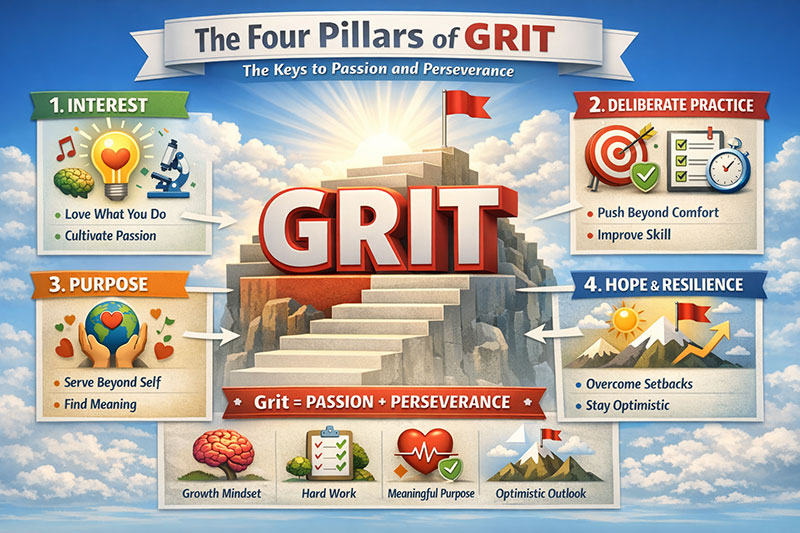
Duckworth says that grit is made up of four parts that work together:
1. Deep Interest: Grit starts with loving what you do. It doesn’t happen overnight that you stay passionate. It changes as you explore, learn, and get involved. A young student trying out several disciplines might find that they are interested in neuroscience, while a musician might fall in love with rhythm before deciding to spend years working hard. Duckworth says that passion is not like lightning; it is something that is grown.
2. Deliberate Practice: Duckworth draws on the work of psychologist Anders Ericsson to underline how important it is to practice with a goal in mind. Deliberate practice is not just doing the same thing over and over; it also includes setting clear goals, getting feedback right away, and pushing yourself beyond your comfort zone. A physician improving their microsurgical abilities, an athlete working on a specific weakness, or a writer constantly rewriting manuscripts are all examples of this approach. Duckworth says, “Without effort, your talent is nothing more than your unmet potential.”
3. Purpose Beyond Self: Grit gets stronger when labour is connected to something bigger. When people think their work is important and makes a difference, they are more likely to keep going. Teachers influencing young minds, doctors aiding impoverished areas, and entrepreneurs creating answers to social problems are just a few examples of people who work hard not only for their own success, but because their work matters.
4. Hope and Resilience: A development mentality, which psychologist Carol Dweck made popular, is a big part of grit. People with grit don’t see setbacks as permanent failures; they see them as short-term problems. Instead of asking, “Why me?” they ask, “What can I learn?” This strong sense of hope keeps people going even when things go tough. Duckworth’s study indicates that hope is not a passive state; it embodies the conviction that work may enhance results.
One of the most interesting examples in the book is West Point’s “Beast Barracks,” which is a tough summer training program. Intelligence scores and physical ability did not accurately forecast program completion. Instead, a short “Grit Scale” questionnaire turned out to be very accurate. People who scored better on perseverance were more likely to last.
Also, the national spelling bee finalists were not just good at remembering things. They practiced on purpose for hours, often going over thousands of phrases that weren’t required for the competition. What set winners apart from participants was their ability to stay focused over time, not their raw verbal intelligence.
The consequences go beyond high-end settings. In the classroom, building grit means praising hard work instead of natural talent. In parenting, it is showing how to be committed and strong. In your working life, this involves keeping your work in line with your long-term goals and not letting yourself get sidetracked.
Duckworth strongly disagrees with the idea that grit is something that can’t be changed. It is not a game of chance with genes. You can also cultivate it through culture, mentorship, discipline, and habit. Organizations may help people develop grit by having high standards and giving them organized assistance. People can develop grit by figuring out what they want to do, setting up habits, and facing hurdles.
But the novel also makes you think deeply. Critics have contended that grit ought not to eclipse underlying inequities or structural impediments. You can’t make up for a lack of opportunity by being persistent. Duckworth recognizes this duality, stressing that grit flourishes in nurturing settings.
The book has deep lessons for leaders. Long-term success in medical, academia, business, or sports demands ongoing guidance. Talent can get you in, but only hard work can keep you in. People who are naturally talented don’t usually become masters in high-skilled jobs; instead, it’s those who keep becoming better at their specialty year after year.
Grit’s take home messages:
- Talent is important, but effort is even more important.
- Exploring and committing to something makes passion grow.
- Deliberate practice is hard, but it changes you.
- Purpose makes you more determined.
- Hope gives strength to stay strong.
- You can work on developing grit on purpose.
Duckworth’s most lasting observation may be this: “Our potential is one thing. What we do with it is a whole different story.”
Grit is both a research-based analysis and a motivating manifesto for a time when people are easily sidetracked by shortcuts and rapid satisfaction. It makes us feel better that greatness isn’t just for geniuses. It belongs to those who are ready to stick with it.
This book is more than just theory for teachers, leaders, parents, and professionals; it is a call to action. Passion shows you the way. Persistence provides you energy. They all work together to make grit, which is the quiet, steady force that drives people to do amazing things.
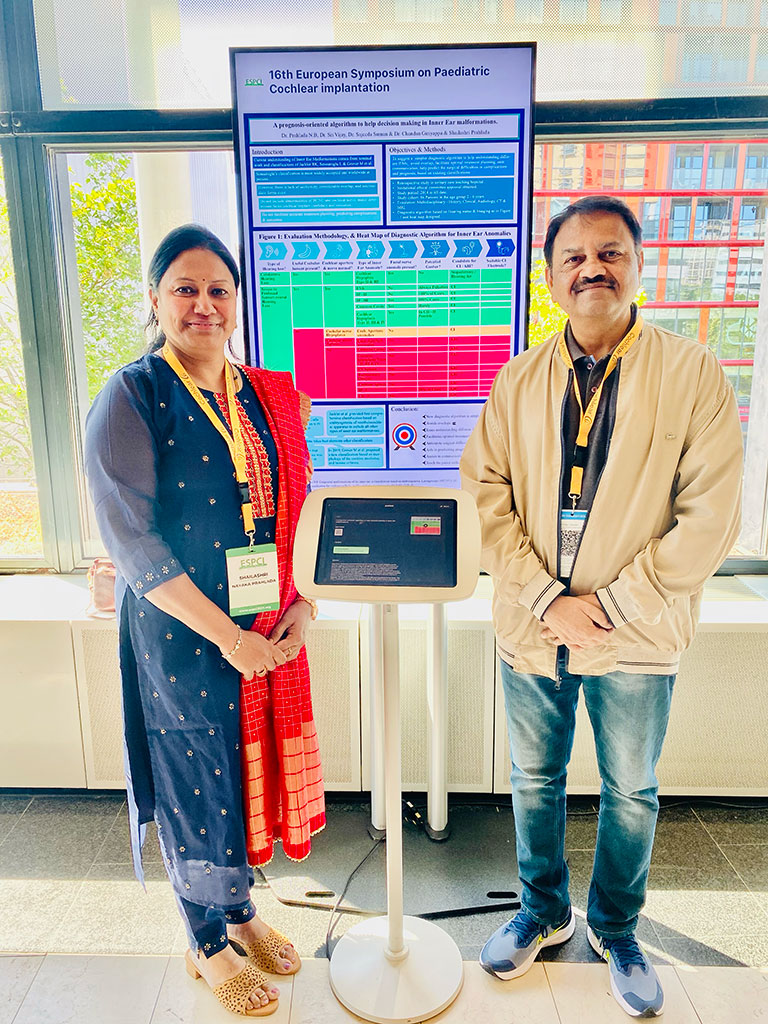
Dr. Prahlada N.B
MBBS (JJMMC), MS (PGIMER, Chandigarh).
MBA in Healthcare & Hospital Management (BITS, Pilani),
Postgraduate Certificate in Technology Leadership and Innovation (MIT, USA)
Executive Programme in Strategic Management (IIM, Lucknow)
Senior Management Programme in Healthcare Management (IIM, Kozhikode)
Advanced Certificate in AI for Digital Health and Imaging Program (IISc, Bengaluru).
Senior Professor and former Head,
Department of ENT-Head & Neck Surgery, Skull Base Surgery, Cochlear Implant Surgery.
Basaveshwara Medical College & Hospital, Chitradurga, Karnataka, India.
My Vision: I don’t want to be a genius. I want to be a person with a bundle of experience.
My Mission: Help others achieve their life’s objectives in my presence or absence!
My Values: Creating value for others.
Leave a reply























Leave a reply