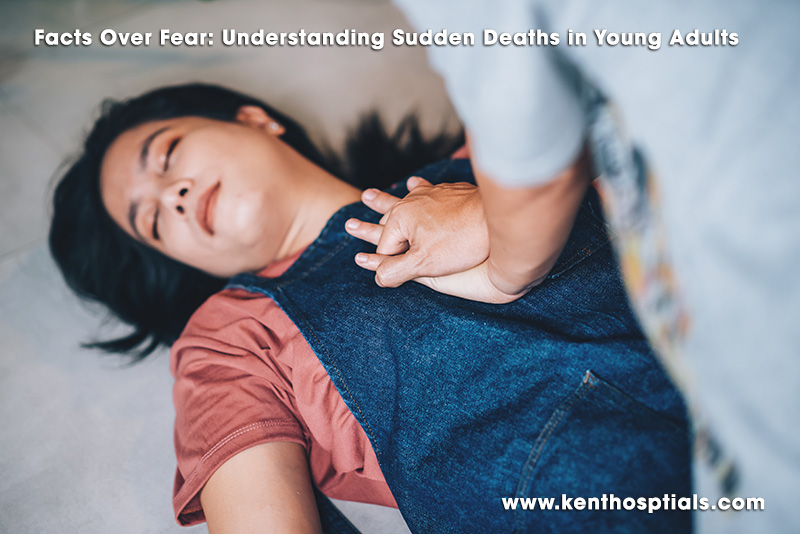
In a world where fear tends to propagate at a rate quicker than facts, science needs to play the very important role of the guiding star for understanding. In this respect, the recent study at the prestigious All India Institute of Medical Sciences (AIIMS) in Delhi, India—is a brilliant case in point where the research of a one-year autopsy-based observation among sudden deaths in the young adults aged 18-45 years debunks the myth of deaths by COVID-19 vaccine with the major contributor for the sudden deaths identified not as COVID-19 but largely due to underlying medical conditions with coronary artery diseases at the head of the list.
Debunking Misinformation with Hard Evidence
In the midst of speculative content on vaccines flooding social media platforms, the methodology conducted in the study bears importance. Verbal autopsies, clinical history evaluation, post-mortem imaging, as well as extensive histopathological analyses were performed on 180 sudden death subjects fulfilling the criteria, including a substantial number among the young. Importantly, there was no statistically significant relationship found among vaccination status and sudden deaths, reinforcing the safety data on the COVID-19 vaccine supported by substantial evaluations on a global scale.
As noted in the press release issued by the Ministry of Health and Family Welfare, “scientific experts have reiterated that claims of sudden deaths attributed to COVID vaccinations are untrue and misleading,” thus emphasizing the importance of evidence-based medicine.
The Hidden Burden: Coronary Artery Disease in the Young
The most unexpected finding was not what had not been associated, but what had: coronary artery disease was the cause of most sudden deaths in this age group. Many such persons had substantial obstruction of their coronary arteries that hadn’t been recognized in life.
A telling case is that of a young software programmer in Bengaluru who suffered a collapse during his morning run. He was considered strong and healthy by his friends and relatives—though autopsy reports showed severe blocked arteries. This is a surprisingly common occurrence in present-day India, where the incidence of ‘silent heart attacks’ is rising among men and women in their 20s and 30s, even when they do not exhibit symptoms such as chest pain.
In a global setting, the same trends also exist. In the Bogalusa Heart Study, it was shown in the U.S. data that the origins of adult cardiovascular disease are established in very young children, as the risk factors often include high cholesterol and high blood pressure.
Why Young Hearts Are at Risk
Then, what are the causes of premature CAD events and SCD in younger individuals?
The answer is multi-factorial:
Lifestyle changes: A sedentary lifestyle, unbalanced eating habits, and substance use such as smoking/tobacco are common among younger individuals in India and the international community. Smoking and exposure to nicotine increase the risk of atherosclerosis and sudden cardiac death.
Genetic/Congenital: Conditions such as hypertrophic cardiomyopathy, long QT syndrome, or aberrant coronary artery origins can lie unsuspected and precipitate sudden death—especially after exercise.
Pressures and stresses: The rate of urbanization, work-life imbalances, and stresses all have physiological effects that contribute to heart conditions.
A U.S. cardiologist once remarked, “The heart doesn’t shout before striking.” This phrase perfectly sums up why so many youth and even healthcare professionals fail to recognize warning signs before it’s tragically too late.
Lessons for Public Health and Individuals
This is a wake-up call in itself. It is a reminder that youth is not a protective factor against this condition, and that screening in early life can be a lifesaver. Screening activities like cholesterol screening, blood pressure screening, and ECG screening are not amenities, but tools that are fundamental to preventative treatment. Initiatives like Cardiac Risk in the Young in Great Britain demonstrate how screening activities may identify underlying conditions and prevent sudden deaths.
Take the story, for example, of the apparently green tree hit by lightning—the greenness concealing the rot. So too with apparent healthiness, health checks are the sunshine that brings hidden rot to light.
Final thoughts: Evidence over Fear
In a time when rumours and myths about vaccines and sudden death are rife, the AIIMS research exemplifies the rigorous pursuit of scientific medicine. This moves our focus away from misguided fears and towards a very real and pressing problem: the rise of coronary artery disease among the young adult community. “Prevention is better than cure,” is a well know adage in public health. What this phrase embodies goes beyond slogans. It includes early screening, promoting lifestyles through awareness, and building health care infrastructures where prevention and early intervention are top priorities. Only then can we hope to fight this “silent epidemic” of early stages of heart disease on solid, informed ground.
Dr. Prahlada N.B
MBBS (JJMMC), MS (PGIMER, Chandigarh).
MBA in Healthcare & Hospital Management (BITS, Pilani),
Postgraduate Certificate in Technology Leadership and Innovation (MIT, USA)
Executive Programme in Strategic Management (IIM, Lucknow)
Senior Management Programme in Healthcare Management (IIM, Kozhikode)
Advanced Certificate in AI for Digital Health and Imaging Program (IISc, Bengaluru).
Senior Professor and former Head,
Department of ENT-Head & Neck Surgery, Skull Base Surgery, Cochlear Implant Surgery.
Basaveshwara Medical College & Hospital, Chitradurga, Karnataka, India.
My Vision: I don’t want to be a genius. I want to be a person with a bundle of experience.
My Mission: Help others achieve their life’s objectives in my presence or absence!
My Values: Creating value for others.
Reference:
Leave a reply

























The myth about covid vaccine was clearly explained sir,it the habit and stress causing heart attack in young than vaccine provide by Aims is scientific evidence. And vaccine has saved so many life during covid.
ReplyDear Dr. Prahlada N. B Sir,
"The heart doesn't shout before it strikes" – This statement is more relevant in today's context of sudden deaths among young adults, highlighting the silent yet deadly nature of coronary artery disease. Your article sheds light on the pressing issue, emphasizing the importance of evidence-based medicine and debunking myths surrounding COVID-19 vaccines.
The AIIMS study's findings are a wake-up call, revealing that underlying medical conditions, particularly coronary artery disease, are the primary cause of sudden deaths in young adults. The fact that many individuals had substantial artery obstruction without exhibiting symptoms is alarming, underscoring the need for early screening and awareness.
Your emphasis on prevention and early intervention is commendable. Initiatives like cardiac risk screening and promoting healthy lifestyles can save lives. The adage "prevention is better than cure" resonates deeply, and it's essential to prioritize healthcare infrastructure and awareness programs.
Thank you for sharing your expertise and highlighting this critical issue. Your work contributes significantly to the medical community and the general public.
Reply